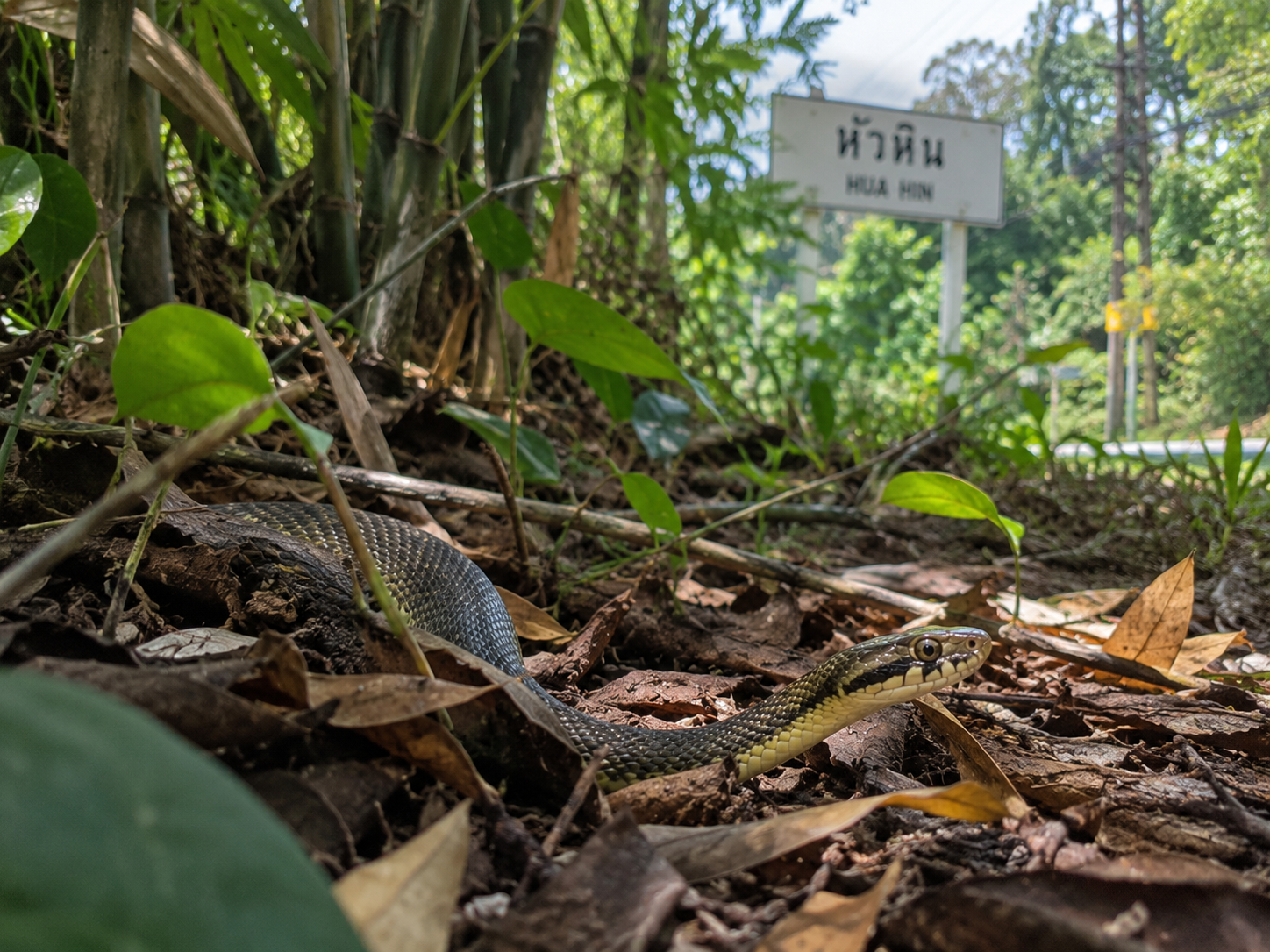
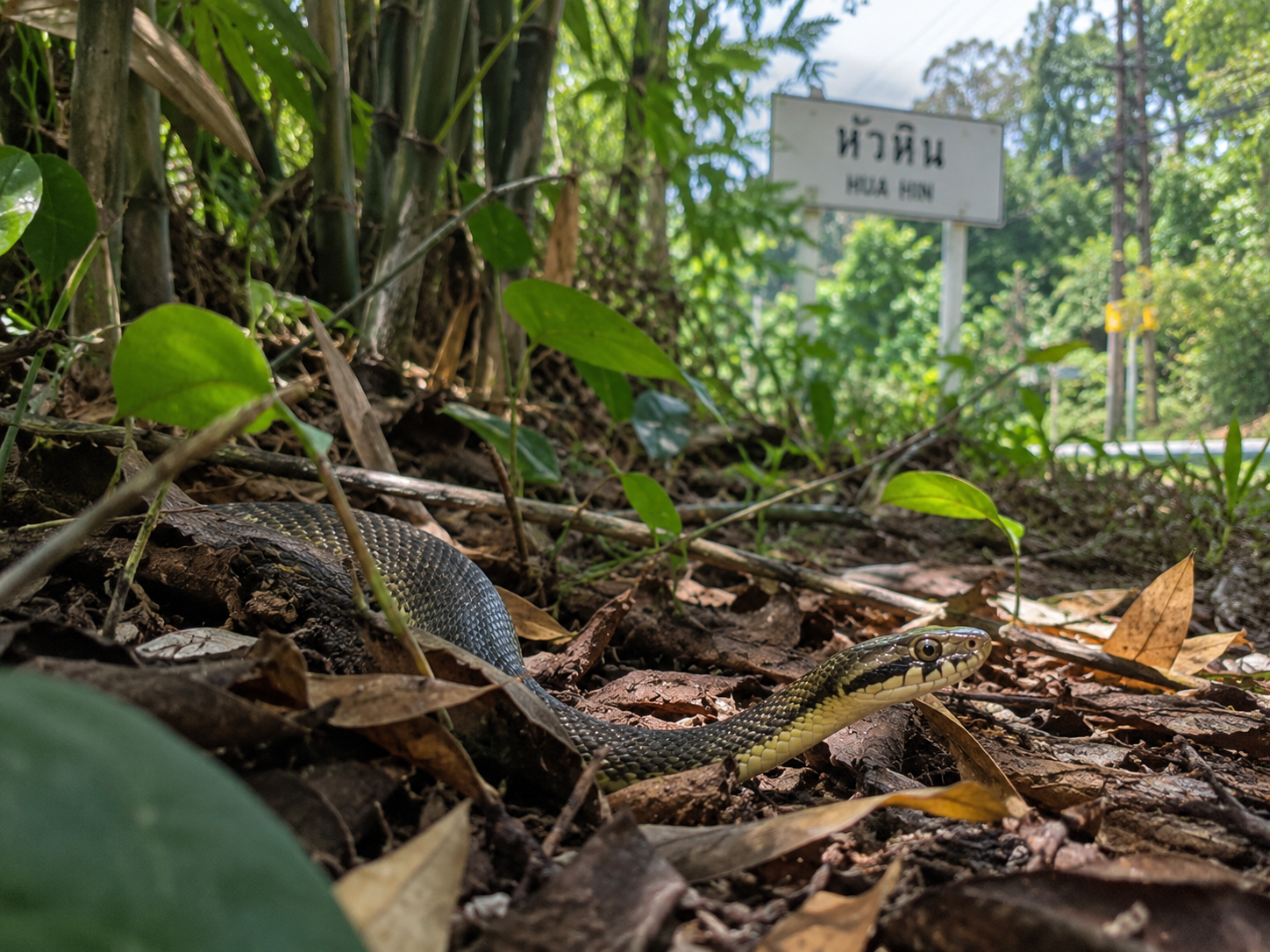
En Hua Hin viven decenas de especies de serpientes. La mayoría son inofensivas y unas pocas son peligrosas. Le explicamos cómo distinguirlas, qué hacer si se encuentra con una y cuándo hay motivos reales para preocuparse.
Si vive en Hua Hin, sobre todo en una villa con jardín o cerca de terrenos rurales, tarde o temprano se encontrará con una serpiente. La mayoría son completamente inofensivas e incluso útiles (comen ratas y ranas). Unas pocas son realmente peligrosas. Aprender a distinguirlas convierte el miedo en algo más parecido a la curiosidad.
Esta guía repasa las especies que es más probable encontrar en la zona de Hua Hin, qué hacer si le muerden y cómo evitar, ante todo, que las serpientes entren en su propiedad.
Las serpientes venenosas de Hua Hin
Estas son las especies que conviene saber identificar. Ninguna de ellas caza activamente a las personas. La mayoría de las mordeduras se producen porque alguien intentó atrapar o matar a la serpiente en lugar de dejarla tranquila.
Cobra real
Ophiophagus hannah
La serpiente venenosa más larga del mundo, con una media de 3 a 4 metros. Veneno muy neurotóxico. Suele ser tímida, pero defiende sus nidos con agresividad. Si ve una, retroceda despacio.
Cobra monóculo
Naja kaouthia
Común en el centro de Tailandia. Se reconoce por la marca en forma de anillo único en la parte posterior de la capucha. Su veneno neurotóxico requiere atención médica inmediata.
Cobra escupidora indochina
Naja siamensis
Puede lanzar veneno a una distancia de hasta 2 metros, apuntando a los ojos. Si el veneno le alcanza los ojos, láveselos inmediatamente con agua limpia y busque asistencia médica.
Krait malayo
Bungarus candidus
Serpiente con bandas blancas y negras de hasta 1 metro aproximadamente. Activa de noche. Mordedura muy neurotóxica. Mantenga cerradas las puertas de los dormitorios y revise los zapatos antes de ponérselos.
Krait bandeado
Bungarus fasciatus
Con bandas amarillas y negras, más grande que el krait malayo. Por lo general es dócil, pero su veneno es peligroso. Principalmente nocturna.
Víbora de foseta malaya
Calloselasma rhodostoma
De color marrón rojizo con marcas triangulares. De 60 a 90 cm. Se encuentra cerca del agua y en zonas húmedas. Su mordedura provoca un dolor intenso, hinchazón y daños en los tejidos.
Víbora de labios blancos
Trimeresurus albolabris
De color verde intenso con una franja blanca a lo largo del labio inferior. Suele encontrarse en árboles y arbustos. Sus mordeduras causan dolor e hinchazón locales; rara vez son mortales, pero siempre requieren tratamiento.
Víbora de ojos grandes
Trimeresurus macrops
Parecida a la víbora de labios blancos, pero con los ojos mucho más grandes. Vive en los árboles y caza de noche.
Víbora de los manglares
Trimeresurus purpureomaculatus
Se encuentra cerca de los manglares costeros. Agresiva y venenosa. Rara vez se ve tierra adentro.
Culebra de cuello rojo
Rhabdophis subminiatus
De color verde oliva con una mancha roja en el cuello. Durante mucho tiempo se consideró inofensiva, hasta que recientemente se clasificó como venenosa. Las mordeduras son poco frecuentes y suelen ser leves.
Las serpientes inofensivas de Hua Hin
La mayoría de las serpientes que verá pertenecen a este grupo. Mantienen a raya a las ratas y las ranas y no quieren saber nada de usted. Identifíquelas, déjelas tranquilas y se marcharán por sí solas.
Pitón reticulada
Python reticulatus
Una de las serpientes más grandes del mundo. Los adultos en libertad miden de media 3,7 metros, pero pueden superar los 5 metros. Excelente nadadora, suele estar cerca del agua. No es venenosa, pero la mordedura de un ejemplar grande puede causar heridas importantes.
Pitón birmana
Python bivittatus
Pitón de cuerpo robusto, de hasta 5 metros. Vive en bosques y praderas. Constrictora no venenosa.
Serpiente ratonera indochina
Ptyas korros
Esbelta, rápida e inofensiva. Se alimenta de ratas y pequeños vertebrados. Se la ve a menudo cruzando caminos rurales. Una invitada bienvenida si tiene problemas de roedores.
Serpiente ratonera oriental
Ptyas mucosa
Hasta 3 metros. Diurna y terrestre. Cuando se siente amenazada hincha el cuello y emite un gruñido, pero no es venenosa en absoluto.
Corredora cabeza de cobre (serpiente ratonera radiada)
Coelognathus radiata
De color marrón a gris con franjas laterales negras. Hasta 2 metros. Cuando se siente amenazada ensancha el cuello verticalmente para parecer más alta. Un farol defensivo inofensivo.
Culebra de agua común
Xenochrophis flavipunctatus
Serpiente semiacuática que vive en ríos lentos, estanques y arrozales. Se alimenta de peces y ranas. Diurna e inofensiva.
Serpiente arborícola dorada (serpiente voladora)
Chrysopelea ornata
Verde lima con un dibujo ajedrezado negro. Ligeramente venenosa, pero no es peligrosa para las personas. Planea entre los árboles mejor que ninguna otra especie de serpiente.
Serpiente dorso de bronce pintada
Dendrelaphis pictus
De color oliva o marrón con una franja amarilla en el costado. Cazadora diurna que se alimenta de lagartijas y ranas. Muy nerviosa, huye rápidamente si se la molesta.
Serpiente liana de nariz larga
Ahaetulla nasuta
Serpiente verde y esbelta que imita una liana. Ligeramente venenosa, sin peligro para las personas. Caza lagartijas y ranas gracias a su visión binocular.
Serpiente gato verde
Boiga cyanea
Vive en arbustos y árboles de bosques y plantaciones. Nocturna. Las crías son naranjas o rojas y los adultos se vuelven verdes con el tiempo.
Serpiente lobo común
Lycodon capucinus
Pequeña, terrestre y fácil de confundir con un krait por sus marcas similares. No es venenosa, pero es nerviosa y muerde si se la manipula.
Serpiente lobo laosiana
Lycodon laoensis
Marrón oscuro con bandas transversales blancas o amarillas. Tímida y no venenosa. Prefiere las zonas de colinas, aunque a veces aparece cerca de las viviendas.
Serpiente kukri bandeada
Oligodon fasciolatus
Serpiente pequeña que vive en bosques de tierras bajas y arrozales. Marrón claro con bandas más oscuras. No venenosa e inofensiva.
Serpiente comebabosas carenada
Pareas carinatus
Unos 60 cm. Vive en zonas bajas y está activa al anochecer y de noche. Se alimenta exclusivamente de caracoles y babosas. Completamente inofensiva.
Falsa víbora común
Psammodynastes pulverulantus
Serpiente pequeña (hasta 65 cm) que imita a una víbora cuando se siente amenazada, enroscándose y lanzando ataques agresivos. Ligeramente venenosa, pero no peligrosa.
Qué hacer si encuentra una serpiente
- •Mantenga la calma y retroceda despacio. La mayoría de las serpientes se marchan solas
- •No intente atraparla ni matarla. La mayoría de las mordeduras se producen al intentar manipular serpientes
- •Mantenga a los niños y a las mascotas alejados de la zona
- •Si es posible, hágale una foto desde una distancia segura (ayuda a identificarla)
- •Llame al Centro de rescate de fauna silvestre: 032-458-135
- •O contacte con el administrador de su propiedad, si lo tiene
Qué hacer si le muerde una serpiente
- •Mantenga la mayor calma posible. El pánico acelera el ritmo cardiaco y hace que el veneno se propague más rápido
- •Mantenga inmóvil la extremidad mordida y por debajo del nivel del corazón
- •Quítese anillos, relojes o prendas ajustadas cerca de la zona de la mordedura
- •Acuda inmediatamente a un hospital. El Bangkok Hospital Hua Hin (1719) dispone de antídoto
- •Si es seguro, haga una foto de la serpiente para identificarla
- •NO corte la herida, no succione el veneno, no aplique hielo ni use un torniquete
Consejos de prevención para su propiedad
- •Mantenga el jardín ordenado y el césped corto
- •Retire los montones de hojas, madera o piedras donde puedan esconderse las serpientes
- •Selle las rendijas alrededor de puertas, ventanas y rejillas de ventilación
- •Guarde bien cerradas las semillas para pájaros y la comida de las mascotas (atraen a las ratas, que a su vez atraen a las serpientes)
- •Revise los zapatos antes de ponérselos, sobre todo si los ha dejado fuera
- •Utilice iluminación exterior por la noche para detectar cualquier visita
Si gestiona usted mismo su propiedad en alquiler y las serpientes son un problema recurrente, hable con nosotros. Coordinamos la retirada de serpientes como parte de nuestro servicio de gestión de propiedades, para que ni propietarios ni inquilinos tengan que ocuparse de ello.