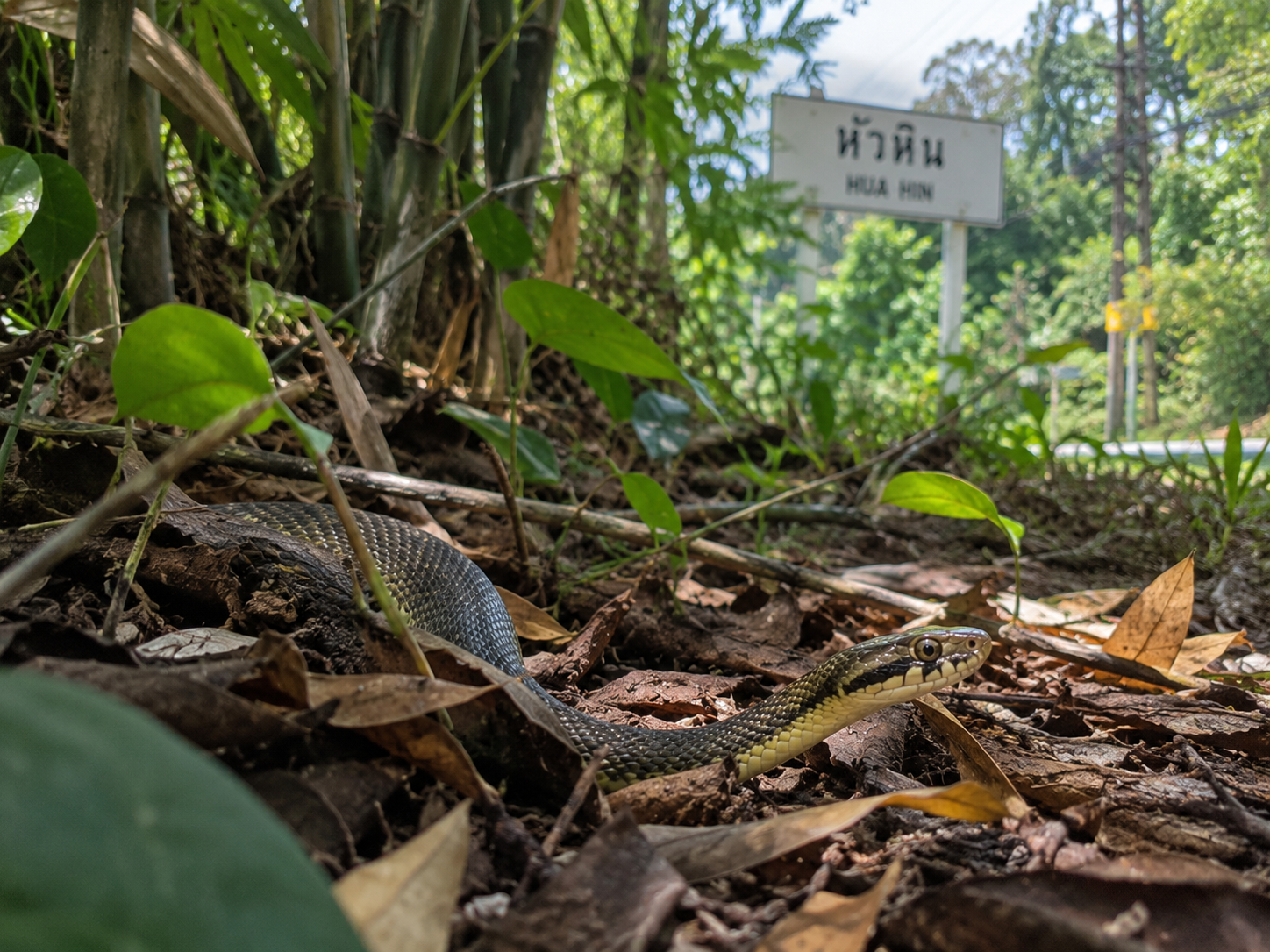
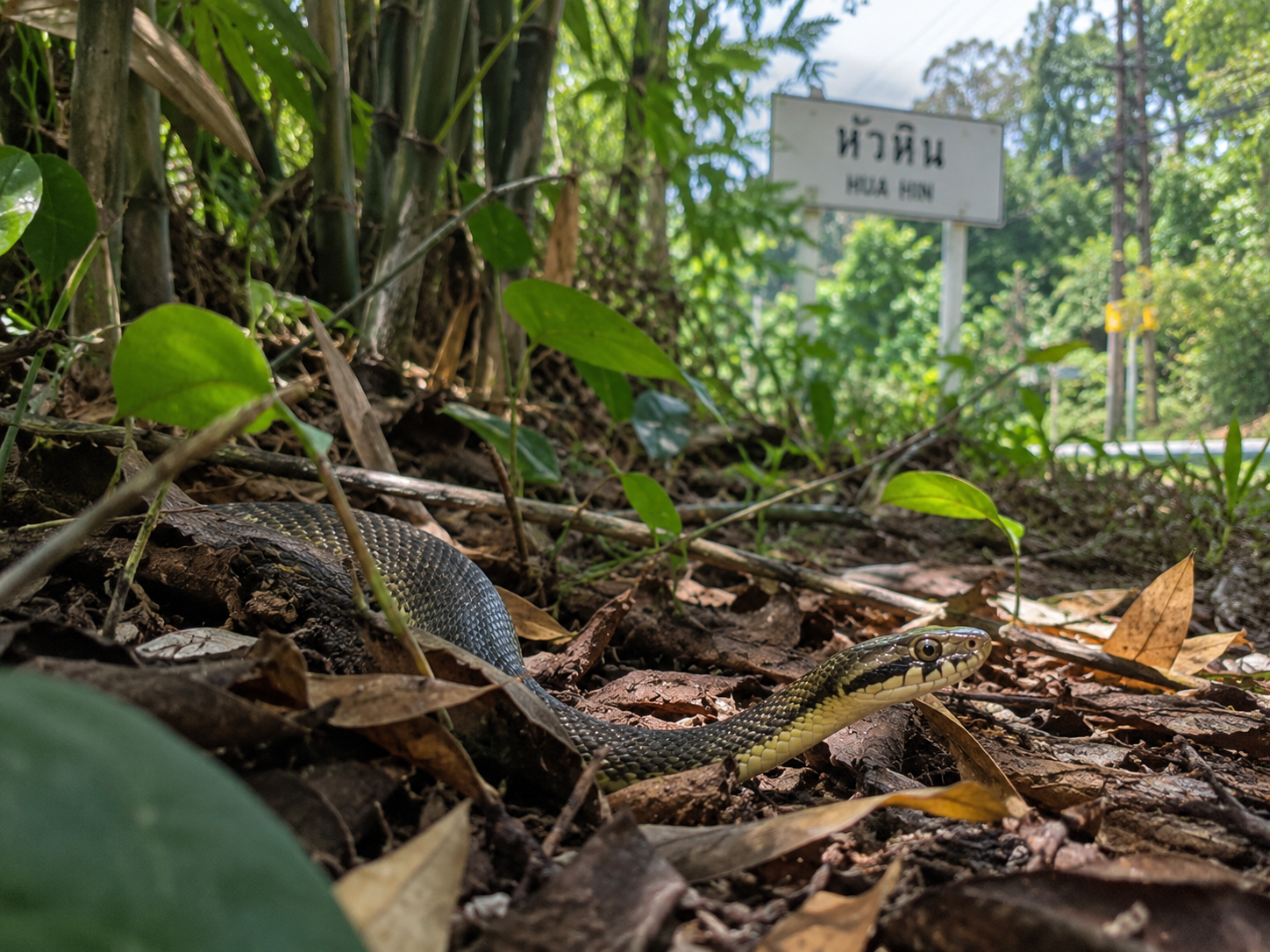
В Хуахине обитают десятки видов змей. Большинство безобидны, лишь немногие опасны. Рассказываем, как их различать, что делать при встрече и когда действительно стоит беспокоиться.
Если вы живёте в Хуахине, особенно на вилле с садом или рядом с сельскими угодьями, рано или поздно вы встретите змею. Большинство из них совершенно безобидны и даже полезны (они едят крыс и лягушек). Лишь несколько видов действительно опасны. Когда вы научитесь их различать, страх сменится чем-то близким к любопытству.
В этом руководстве описаны виды, которые чаще всего встречаются в районе Хуахина, что делать при укусе и как в принципе не допустить змей на свою территорию.
Ядовитые змеи Хуахина
Эти виды стоит уметь узнавать. Ни один из них не охотится на людей. Большинство укусов происходит, когда человек пытается поймать или убить змею, вместо того чтобы оставить её в покое.
Королевская кобра
Ophiophagus hannah
Самая длинная ядовитая змея в мире, в среднем 3–4 метра. Сильный нейротоксичный яд. Обычно пуглива, но агрессивно защищает гнездо. Увидев её, медленно отойдите.
Моноклевая кобра
Naja kaouthia
Часто встречается в центральном Таиланде. Узнаётся по одному кольцевому рисунку на задней стороне капюшона. Нейротоксичный яд, требуется немедленная медицинская помощь.
Индокитайская плюющаяся кобра
Naja siamensis
Может выбрасывать яд на расстояние до 2 метров, целясь в глаза. Если яд попал в глаза, немедленно промойте их чистой водой и обратитесь за медицинской помощью.
Малайский крайт
Bungarus candidus
Змея с чёрными и белыми кольцами длиной примерно до 1 метра. Активна ночью. Сильно нейротоксичный укус. Держите двери спален закрытыми и проверяйте обувь, прежде чем её надеть.
Ленточный крайт
Bungarus fasciatus
С жёлтыми и чёрными кольцами, крупнее малайского крайта. Обычно спокоен, но яд опасен. Ведёт преимущественно ночной образ жизни.
Малайский щитомордник
Calloselasma rhodostoma
Красновато-коричневый с треугольными отметинами. 60–90 см. Встречается у воды и во влажных местах. Укус вызывает сильную боль, отёк и повреждение тканей.
Белогубая куфия
Trimeresurus albolabris
Ярко-зелёная с белой полосой вдоль нижней губы. Часто встречается на деревьях и в кустах. Укусы вызывают местную боль и отёк, редко смертельны, но всегда требуют лечения.
Большеглазая куфия
Trimeresurus macrops
Похожа на белогубую куфию, но с гораздо более крупными глазами. Живёт на деревьях, охотится ночью.
Мангровая куфия
Trimeresurus purpureomaculatus
Встречается у прибрежных мангровых зарослей. Агрессивна и ядовита. Вдали от побережья встречается редко.
Красношейный уж
Rhabdophis subminiatus
Оливково-зелёный с красным пятном на шее. Долгое время считался безобидным, пока недавно его не отнесли к ядовитым. Укусы редки и обычно лёгкие.
Безобидные змеи Хуахина
Большинство змей, которых вы действительно увидите, относятся к этой группе. Они сдерживают численность крыс и лягушек и не хотят иметь с вами ничего общего. Узнайте их, оставьте в покое, и они уползут сами.
Сетчатый питон
Python reticulatus
Одна из крупнейших змей в мире. Взрослые особи в природе в среднем достигают 3,7 метра, но могут вырастать более чем до 5 метров. Отлично плавает, часто держится у воды. Не ядовит, но укус крупной особи может причинить серьёзный вред.
Тигровый питон
Python bivittatus
Массивный питон длиной до 5 метров. Встречается в лесах и на лугах. Неядовитый, душит добычу.
Индокитайский полоз
Ptyas korros
Стройный, быстрый и безобидный. Ест крыс и мелких позвоночных. Часто пересекает сельские дороги. Желанный гость, если у вас проблема с грызунами.
Восточный крысиный полоз
Ptyas mucosa
До 3 метров. Активен днём, живёт на земле. При угрозе раздувает шею и рычит, но совершенно неядовит.
Медноголовый полоз (лучистый полоз)
Coelognathus radiata
От коричневого до серого цвета с чёрными боковыми полосами. До 2 метров. При угрозе вертикально раздувает шею, чтобы казаться выше. Безобидный защитный блеф.
Обыкновенный килевой уж
Xenochrophis flavipunctatus
Полуводная змея, живущая в медленных реках, прудах и на рисовых полях. Ест рыбу и лягушек. Активна днём, безобидна.
Золотистая древесная змея (летающая змея)
Chrysopelea ornata
Лаймово-зелёная с чёрным клетчатым узором. Слабоядовита, но не опасна для человека. Планирует между деревьями лучше любой другой змеи.
Расписная бронзовая змея
Dendrelaphis pictus
Оливковая или коричневая с жёлтой полосой вдоль бока. Дневной охотник, питается ящерицами и лягушками. Очень пуглива, быстро убегает, если её потревожить.
Длинноносая плетевидка
Ahaetulla nasuta
Тонкая зелёная змея, похожая на лиану. Слабоядовита, для человека не опасна. Охотится на ящериц и лягушек благодаря бинокулярному зрению.
Зелёная кошачья змея
Boiga cyanea
Встречается в кустах и на деревьях в лесах и на плантациях. Активна ночью. Молодые змеи оранжевые или красные, взрослые со временем становятся зелёными.
Обыкновенная волчья змея
Lycodon capucinus
Небольшая наземная змея, которую легко спутать с крайтом из-за похожего рисунка. Неядовита, но пуглива и может укусить, если взять её в руки.
Лаосская волчья змея
Lycodon laoensis
Тёмно-коричневая с белыми или жёлтыми поперечными полосами. Пуглива и неядовита. Предпочитает холмистую местность, но иногда встречается рядом с домами.
Полосатая кукри
Oligodon fasciolatus
Небольшая змея, обитающая в равнинных лесах и на рисовых полях. Светло-коричневая с более тёмными полосами. Неядовита и безобидна.
Килеватая слизнеедка
Pareas carinatus
Около 60 см. Живёт в низменностях, активна в сумерках и ночью. Питается исключительно улитками и слизнями. Совершенно безобидна.
Ложная гадюка
Psammodynastes pulverulantus
Небольшая змея (до 65 см), которая при угрозе изображает гадюку: сворачивается кольцами и агрессивно делает выпады. Слабоядовита, но не опасна.
Что делать, если вы нашли змею
- •Сохраняйте спокойствие и медленно отойдите. Большинство змей уползают сами
- •Не пытайтесь поймать или убить змею. Большинство укусов случается именно при попытке взять её в руки
- •Уведите детей и домашних животных подальше
- •По возможности сфотографируйте змею с безопасного расстояния (это поможет её опознать)
- •Позвоните в Центр спасения диких животных: 032-458-135
- •Или свяжитесь с управляющим вашей недвижимостью, если он у вас есть
Что делать, если вас укусили
- •Постарайтесь сохранять спокойствие. Паника учащает сердцебиение, и яд распространяется быстрее
- •Держите укушенную конечность неподвижно и ниже уровня сердца
- •Снимите кольца, часы или тесную одежду рядом с местом укуса
- •Немедленно отправляйтесь в больницу. В Bangkok Hospital Hua Hin (1719) есть противоядие
- •Если это безопасно, сфотографируйте змею для опознания
- •НЕ надрезайте рану, не высасывайте яд, не прикладывайте лёд и не накладывайте жгут
Как защитить свой участок
- •Поддерживайте порядок в саду и коротко стригите траву
- •Уберите кучи листьев, дров или камней, где могут прятаться змеи
- •Заделайте щели вокруг дверей, окон и вентиляционных отверстий
- •Храните корм для птиц и домашних животных в закрытой таре (он привлекает крыс, а крысы привлекают змей)
- •Проверяйте обувь, прежде чем надеть её, особенно если она стояла на улице
- •Включайте наружное освещение ночью, чтобы заметить непрошеных гостей
Если вы сами управляете своей арендной недвижимостью и змеи появляются постоянно, обратитесь к нам. Мы организуем отлов змей в рамках нашей услуги по управлению недвижимостью, чтобы владельцам и арендаторам не приходилось заниматься этим самим.