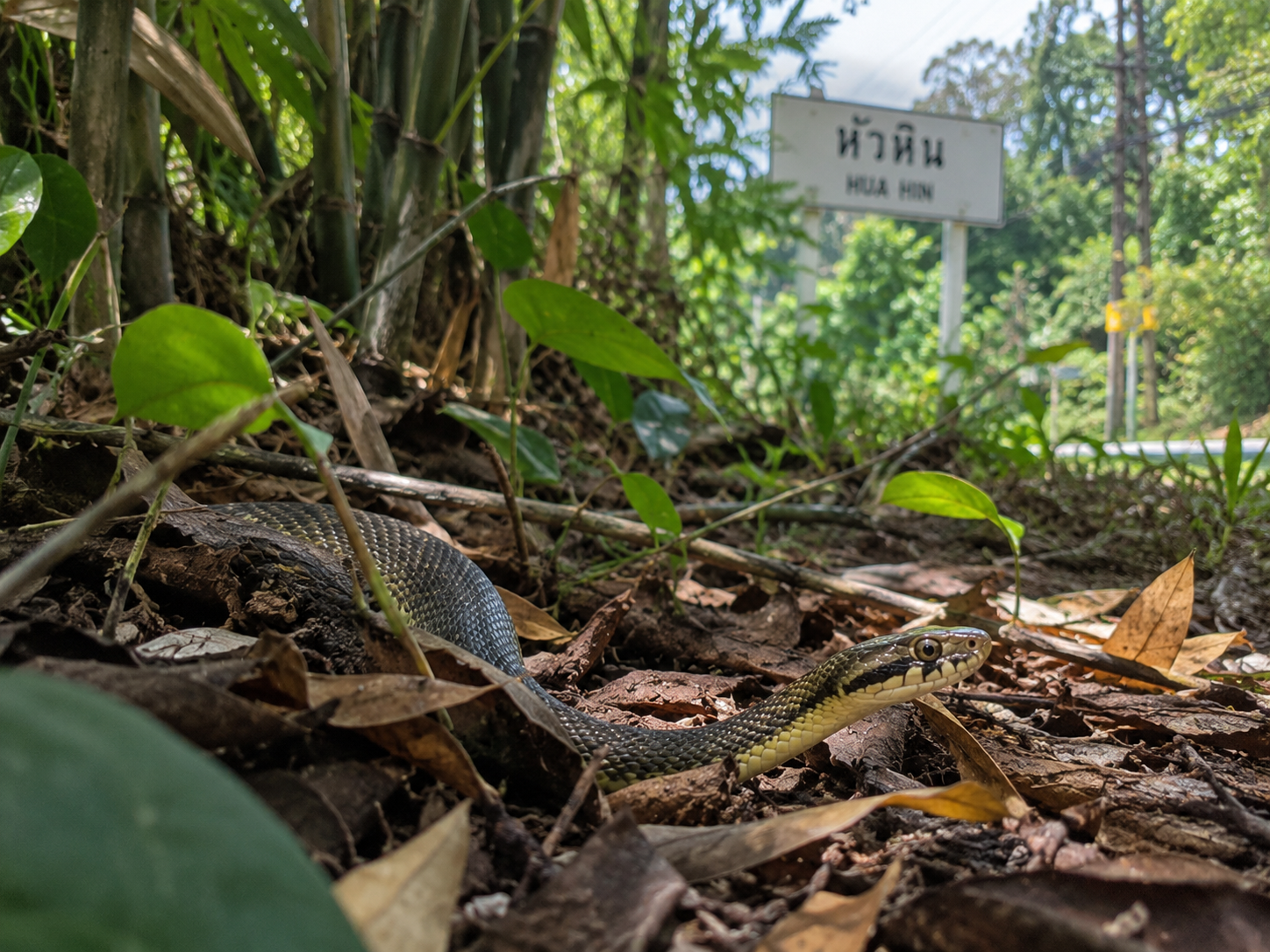
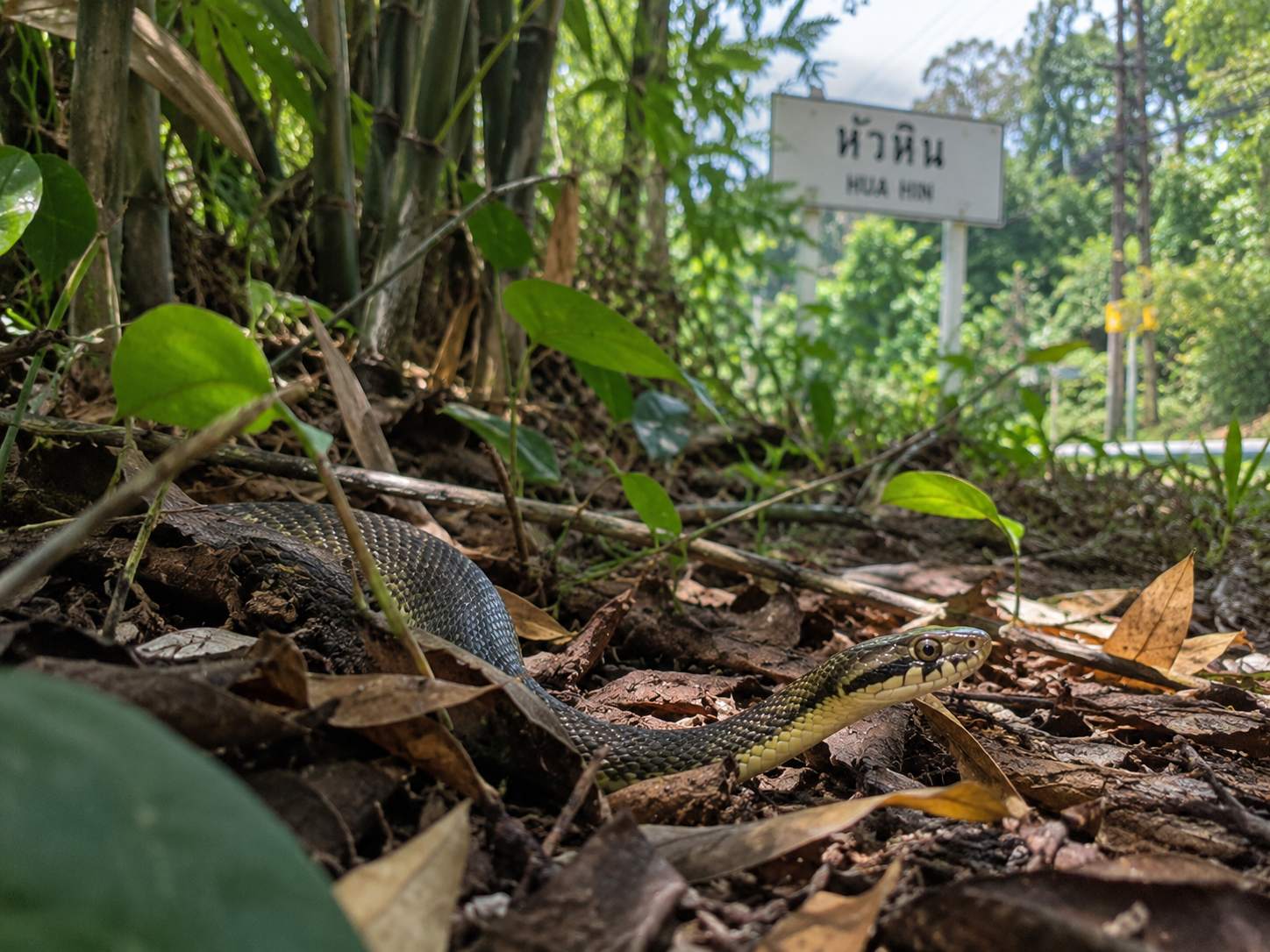
Hua Hin is home to dozens of snake species. Most are harmless, a few are dangerous. Here is how to tell them apart, what to do if you meet one, and when to actually worry.
Snakes are probably the most feared of all animals, and most people's first instinct is to grab a tool and try to kill one. The reality is that there are about 200 species of snake in Thailand, and only 60 of them are venomous.
Only a few can hurt humans, and all of them prefer to avoid people. There are only about 30 snakebite deaths in the country, and almost all of them happen in remote villages.
Snakes are also good for Thailand's ecosystem. Many feed on mice and rats, keeping rodent numbers down, which reduces crop losses and the spread of disease. Some of the smaller snakes eat insect larvae and help control ant and termite populations.
In this article, we focus on the species you are most likely to meet in Hua Hin and how to react if you come across one. Once you can identify the common snakes, you will stop fearing them and know what to do. You will probably also enjoy showing off by naming the species.
Snakebite first aid
What to do if you are bitten by a snake
- Keep still and calm to slow the spread of the venom.
- Remove any jewelry or watches if swelling occurs, as they could cut into the skin.
- Cover the bite gently with a bandage or a clean, dry cloth.
- Ask to be carried if possible, because any exertion may increase venom absorption.
- Get medical help: call 1669 for an ambulance or ask someone to take you to the nearest hospital.
What not to do if you are bitten by a snake
- •Don't wait to seek medical attention.
- •Don't apply a tourniquet.
- •Don't cut the wound with a knife.
- •Don't try to suck out the venom.
- •Don't apply ice or put the wound in water.
- •Don't drink alcohol or caffeine before treatment.
What to do if a cobra spits venom in your eyes
- Treat the eye immediately: rinse the affected eye or eyes with plenty of fluid. Water and milk are both suitable.
- See a doctor as soon as possible: the eye or eyes need to be examined for damage. You may also need to take antibiotics for a few days to prevent a bacterial infection.
The venomous snakes of Hua Hin
King cobra (Ophiophagus hannah)
Thai name: ngu jong aang
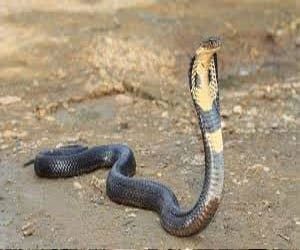
The king cobra averages 3 to 4 m in length and typically weighs about 6 kg.
Its venom consists mainly of neurotoxins, including haditoxin, along with several other compounds, so large quantities of antivenom may be needed to reverse the symptoms of a bite. The toxins attack the victim's central nervous system, causing severe pain, blurred vision, vertigo, drowsiness and eventually paralysis.
In a serious envenomation, this progresses to cardiovascular collapse and coma, and death soon follows from respiratory failure. A king cobra bite can kill in as little as 30 minutes.
Siamese spitting cobra (Naja siamensis)
Thai name: ngu haow thong ponn phit
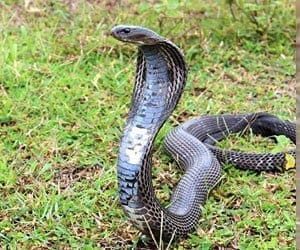
This is a medium-sized snake, averaging 0.9 to 1.2 m in length, though it can grow a little longer, to 1.5 m.
Although not very aggressive by nature, it can and will readily spit venom when cornered or threatened. It will also strike and bite.
Like other cobras, it has postsynaptic neurotoxic venom, which may also contain cardiotoxins and cytotoxins.
It is very dangerous. Its bite is potentially fatal, and the venom it spits can cause blindness.
Monocled cobra (Naja kaouthia)
Thai name: ngu haow Thai
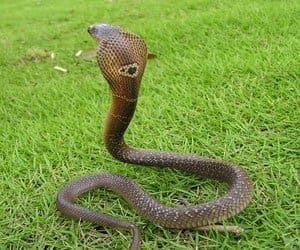
The monocled cobra has an O-shaped, monocellate (single eye-spot) pattern on its hood.
When threatened, it raises the front of its body, spreads its hood, usually hisses loudly and strikes in an attempt to bite and defend itself.
The main toxic components of cobra venom are postsynaptic neurotoxins, which block nerve transmission.
The monocled cobra causes more snakebite deaths than any other snake in Thailand.
Malayan krait (Bungarus candidus)
Thai name: ngu thap saming khlaa
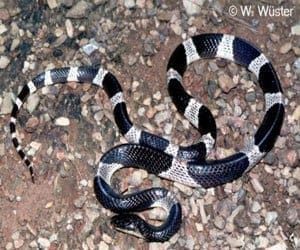
The Malayan krait can reach a total length of 108 cm. Along its back it has 27 to 34 dark brown, black or bluish-black crossbands on the body and tail, which narrow and round off on the sides.
Its venom is neurotoxic: it attacks the human nervous system and shuts it down. Coma, brain death and suffocation, caused by paralysis of the muscles and nerves needed for vital functions such as the diaphragm or heart, are frequent causes of death. An untreated bite usually kills within 12 to 24 hours.
Banded krait (Bungarus fasciatus)
Thai name: ngu saam liam
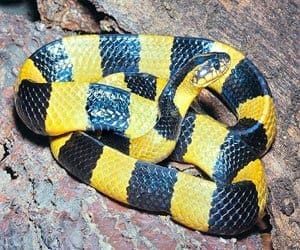
It is easy to identify by its alternating black and yellow crossbands, its triangular body cross-section and the marked ridge of enlarged scales along its spine.
Banded kraits are shy, rarely seen and mainly nocturnal. When harassed, they usually hide their heads under their coils and do not generally try to bite.
The main effects of its venom include vomiting, abdominal pain, diarrhea and dizziness. Severe envenomation can lead to respiratory failure, and death may occur from suffocation. Few confirmed records of people being bitten exist.
Malayan pit viper (Calloselasma rhodostoma)
Thai name: ngu ga pha
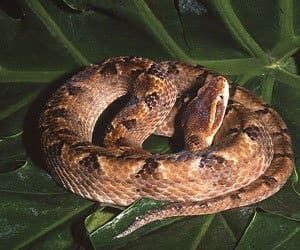
Along its back it is reddish, grayish or pale brown, with two rows of large, dark brown, black-edged triangular blotches, which either alternate or sit opposite each other.
This species has a reputation for being bad-tempered and quick to strike, and its strike is very fast. Its fangs are long and at the front of the mouth. Some strikes are short; in others the whole body "jumps" as it strikes.
It is very toxic. The venom is necrotoxic: it destroys every cell it touches, including red blood cells, muscle and ligaments. It makes victims bleed from the body's openings (eyes, nose, mouth, ears and genitals) and sometimes, fatally, in the brain. Most people survive if they get to a hospital.
White-lipped pit viper (Trimeresurus albolabris)
Thai name: ngu khieow hang mai thong lueang
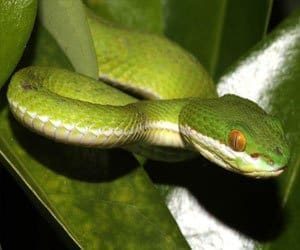
It is green above, and the side of the head below the eyes is yellow, white or pale green, much lighter than the rest of the head. The belly is green, yellowish or white. All males have a light stripe along the lower sides; females do not.
Bites from this species range from mild envenomation to death. Its venom has procoagulant properties. Many bites have been reported, with few deaths.
Macrops pit viper (Trimeresurus macrops)
Thai name: ngu khieow hang mai dtaa dtoo
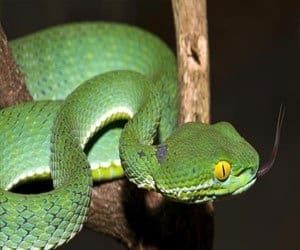
It can be told apart from other green pit vipers by its relatively large eyes, which are especially noticeable in adults and which give the species its name, macrops.
The venom of Cryptelytrops (Trimeresurus) macrops consists mainly of hemotoxin and pro- and anticoagulants. Studied bites showed clear effects on the fibrinolytic system and caused clotting problems.
In the first stages, a bite causes redness, bleeding from the wound, irritation, swelling, pain, bruising, increasing pain, headache, nausea, stomach pain, and cramps leading to diarrhea and vomiting. Long-term effects can include tissue damage and even the loss of a limb or part of one.
Mangrove pit viper (Trimeresurus purpureomaculatus)
Thai name: ngu pang ka
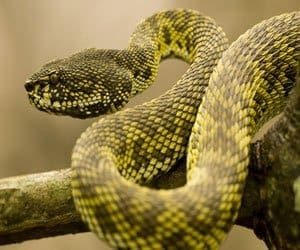
Males grow to about 60 cm and females to about 90 cm on average. They are usually found near water and in very wet areas such as coastal mangroves or brackish water.
Its venom is very toxic to humans. Although people have died from its bites, this is not usually the case. Symptoms include pain, severe swelling, bruising, blistering and necrosis.
Red-necked keelback (Rhabdophis subminiatus)
Thai name: ngu lai saap khor daeng
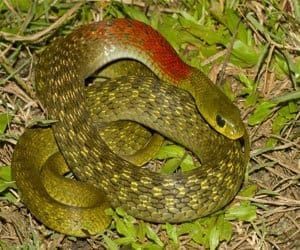
It has a greenish hue with red and yellow areas near the head, and grows to 70 to 90 cm.
It was once thought to be harmless, but after one fatal and several near-fatal bites, its venom was investigated and the species has recently been reclassified as dangerous. Rear-fanged snakes like this one need to bite and hold on, or bite repeatedly, to have any effect on humans.
The harmless snakes of Hua Hin
Sunbeam snake (Xenopeltis unicolor)
Thai name: ngu saeng aatit
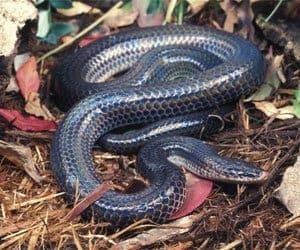
The sunbeam snake is a primitive snake known for its highly iridescent scales and for breeding quickly: it can lay up to 10 eggs at a time.
It grows to about 1 m on average. Its head is narrow and wedge-shaped with little distinction from the neck, which helps it push through soil.
Common keelback (Xenochrophis flavipunctatus)
Thai name: ngu lai sor baan
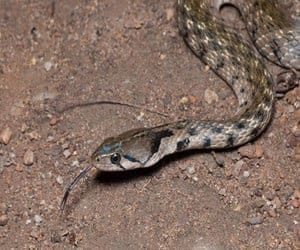
The common keelback is a semi-aquatic snake found in slow rivers and streams, marshes, swamps, ponds and lakes. It also thrives in wet, human-made habitats such as rice fields and ditches. It is active by day and feeds on fish and frogs.
Reticulated python (Python reticulatus)
Thai name: ngu luam
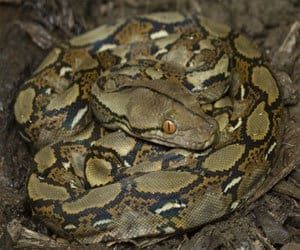
Reticulated pythons are the world's longest snakes (1.5 to 6.5 m) and among the three heaviest. Smaller specimens are 3 to 4 m long. They are non-venomous, but because of their size they can strangle a human, and a bite could land you in hospital. Their natural diet is mammals and occasionally birds.
They usually live in forests, woodlands and nearby grasslands, and are often found near rivers, streams and lakes.
Burmese python (Python bivittatus)
Thai name: ngu laam
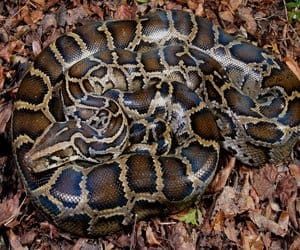
It is one of the five largest snake species in the world. Wild individuals average 3.7 m in length but have been known to reach 5.74 m.
It is an excellent swimmer and needs a permanent source of water. It lives in grasslands, marshes, swamps, rocky foothills, woodlands, river valleys and jungles with open clearings. It is also a good climber, with a prehensile tail. Although non-venomous, its bite can cause serious damage.
Indo-Chinese rat snake (Ptyas korros)
Thai name: ngu sing tammada
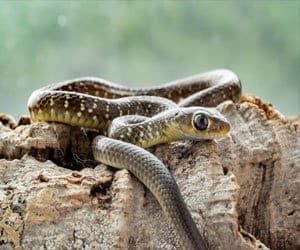
A harmless snake of farmland and forest, this species preys on rats, frogs and other small vertebrates. It is active by day and lives mainly on the ground. Most encounters with the Indo-Chinese rat snake happen as it tries to cross rural roads.
You can identify it by its olive tail with dark-edged scales and the faint pale brown banding on the thickest part of its body.
Oriental rat snake (Ptyas mucosa)
Thai name: ngu sing hang lai
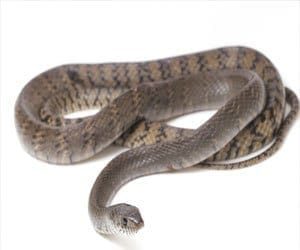
It grows to 2 m, and occasionally even 3 m. Its color varies from pale brown in dry regions to almost black in damp forest areas.
It is active by day, partly tree-dwelling, non-venomous and fast-moving. When threatened, adults make a growling sound and inflate their necks.
Common mock viper (Psammodynastes pulverulentus)
Thai name: ngu mok
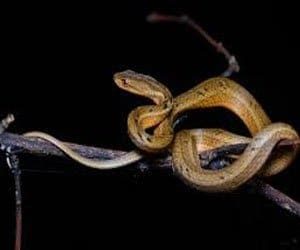
The common mock viper is a snake native to Asia, and one of the few snake species with three hemipenes.
It is small (up to 65 cm in total length, less in males), but when threatened it forms defensive coils and strikes like a viper.
It is mildly venomous but not dangerous to humans.
Keeled slug snake (Pareas carinatus)
Thai name: ngu gin thaag gled sann lai
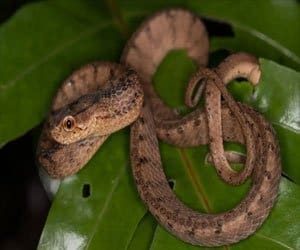
Usually about 60 cm long, the keeled slug snake lives mainly in the lowlands and is only rarely found near human settlements, villages or cultivated areas.
It is active at dusk and at night, moving slowly near the ground as it looks for food. It feeds on snails and slugs.
Cambodian kukri snake (Oligodon mouhoti)
Thai name: ngu ngod khamin
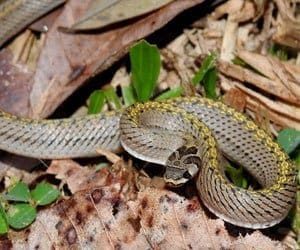
It lives in lowland forests and disturbed habitats, including secondary scrub and rice paddies.
Its body is pale brown or tan with a lighter stripe along the spine, and the tail is orange-brown. The underside is orange or red with dark blotches, which you may see if the snake curls up the tip of its tail in what looks like a warning posture.
This snake lives entirely on the ground and appears to be active both by day and by night.
Banded kukri snake (Oligodon fasciolatus)
Thai name: ngu pbi geaow lai taem
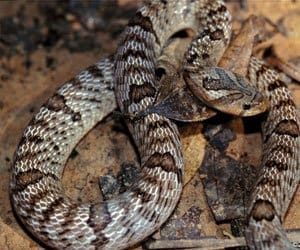
This species varies in base color and in how strong its pattern is. It is typically light brown, buff or gray-brown, with irregular darker brown crossbands edged in black.
It is said to be aggressive when disturbed.
Laotian wolf snake (Lycodon laoensis)
Thai name: ngu plong cha nuan lao
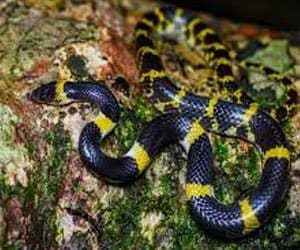
It is dark brown, with a whitish or yellowish crossband on the back of the head and similar crossbands on the body that fork on the sides. The underside is whitish. Adults are about 0.5 m (50 cm) long.
These ground-dwelling snakes are rather shy and like to hide under things. Laotian wolf snakes prefer mountains and hilly areas but are sometimes found close to homes.
Common wolf snake (Lycodon capucinus)
Thai name: ngu plong cha nuan soy lueang
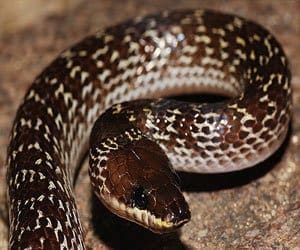
Although the wolf snake is non-venomous, it is quite nervous when picked up or handled and will not hesitate to bite. When it feels threatened, it may also swish its tail to and fro, much like a rattlesnake.
It likes to burrow but is most often found on open ground, on rocks or in low vegetation, and sometimes climbs. It is most active at night.
Copperhead racer (Coelognathus radiata)
Thai name: ngu taang mapaoit
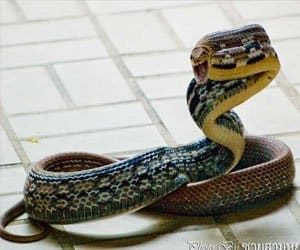
It can be brown, copper or gray, with black stripes along the sides of the upper half of the body and a side stripe from the midsection that fades out towards the tail. Fully grown, it is around 3 cm in diameter and over 2 m long.
When threatened, the copperhead racer puffs up its neck, which expands vertically to make it look taller. It is a harmless defensive tactic but can be unsettling if you are not used to it. These snakes almost always flee extremely quickly if they sense you approaching.
Golden tree snake (Chrysopelea ornata)
Thai name: ngu kee-ow ly dok mak
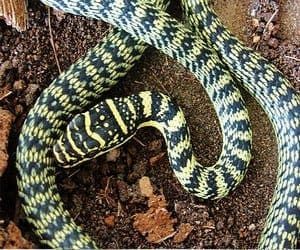
It is slightly venomous but not dangerous. Golden tree snakes are also known as flying snakes: they glide very well, perhaps better than any other snake in the world, and even better than some squirrels and lizards.
They have a lime green and black checkered pattern. They live in trees but can climb almost anything, even walls, and are often seen eating tokay geckos.
Painted bronzeback (Dendrelaphis pictus)
Thai name: ngu sai man pha inn
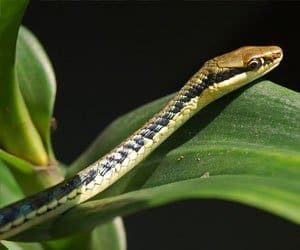
It is olive or brown above, with a yellow stripe along each side, bordered below by a dark line between the outer scales and the belly scales.
It is fully diurnal: by day it actively hunts its prey, mainly lizards and frogs, and at night it rests on narrow tree branches a few meters above the ground.
It is nervous by nature and will flee swiftly when disturbed.
Green cat snake (Boiga cyanea)
Thai name: ngu khiaow bon
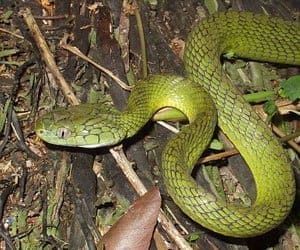
Boiga cyanea is found mainly in flat lowlands, where it lives in bushes and trees in woods and plantations. It is nocturnal.
Young snakes are orange or red, turning brown and then green after about six months. It feeds mainly on lizards, frogs, rodents and birds, and occasionally on other snakes.
Long-nosed vine snake (Ahaetulla nasuta)
Thai name: ngu khiaow pak naenb
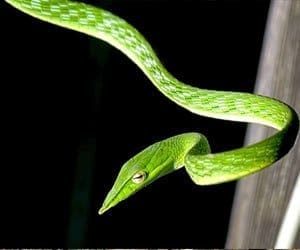
The green vine snake is active by day and mildly venomous. It feeds mainly on frogs and lizards, using its binocular vision to hunt.
It moves slowly and relies on its camouflage as a vine among the leaves. When disturbed, it expands its body to show black and white scale markings. It may also open its mouth in a threat display and point its head towards the perceived threat.
Browse by type: Houses & villas for saleCondos & apartments for saleLand for saleHouses & villas for rentCondos & apartments for rent